For three decades, Task Force Health Care has been working to improve healthcare worldwide by connecting the right people and organisations. It all started with a challenge in India. Philips, the Dutch and Indian governments, and forty other partners laid the foundations for a collaborative model that would, thirty years on, come full circle in India.
A challenge from Gujarat
In the 1990s, the Indian state of Gujarat was facing a fundamental challenge in healthcare. Local hospitals lacked the resources needed to provide basic care, forcing patients to seek treatment at larger academic hospitals. As a result, the pressure on these hospitals mounted further, and routine tasks could no longer be carried out properly.
All 23 district hospitals needed to be upgraded so that care could be delivered more efficiently and the burden on academic hospitals could be reduced. A major undertaking for the local government. Philips Medical Systems India recognised the scale of the challenge and took the initiative. A team set out to examine how healthcare across the state could be improved, focusing on four areas: maternal and child health, trauma care, kidney care, and eye care.
Rethinking Healthcare Collaboration
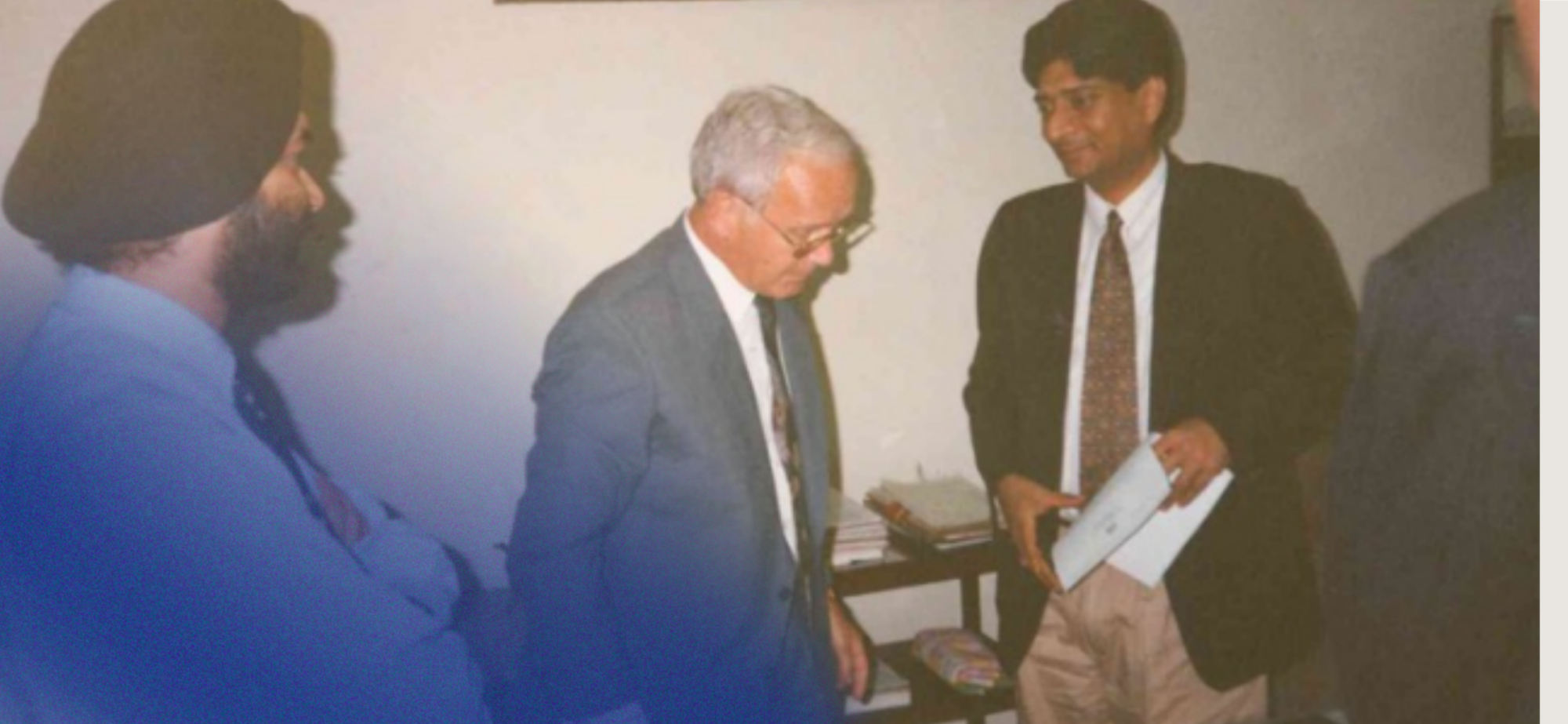
No single commercial party could answer this question alone. So In 1996, Philips brought together seventeen local companies, twenty Dutch companies, knowledge institutions, NGOs and the Dutch government. With support from the Dutch government’s ORET programme, an agreement was reached. Within two years, more than 25,000 medical products and pieces of equipment had been delivered to 65 locations across Gujarat.
However, supplying equipment was not enough. As part of the project, the Indian government invested in infrastructure, while the task force provided training and support to healthcare staff. The result was a lasting impact on both India’s healthcare system and the way the government approached healthcare development. “This project fundamentally changed the mindset of the Indian government,” says Micha van Lin, Director of Task Force Health Care.
A model worth repeating
Once the agreement had been concluded, the Dutch stakeholders came together once again. If this approach worked in Gujarat, why not elsewhere? That question gave rise to Task Force Health Care.
“The Gujarat project was truly initiated by a group of Dutch companies and organisations, led by Philips,” says Van Lin. “It was the first time that companies, knowledge institutions and government successfully worked together on a healthcare project using what we call the Dutch Diamond Approach. It proved to be a successful formula, and it left everyone wanting more. That ultimately led to the founding of Task Force Health Care.”
The success came down to the integrated nature of the approach, according to Van Lin. “By bringing together a diverse range of partners and providing training and education, you build wider support and ensure sustainable implementation. You’re not left with one party that delivers the equipment and disappears, you create partnerships that ensure solutions are firmly embedded within the local healthcare system.”
From development aid to equal partnership
Little has changed about the approach over the past thirty years. For three decades, TFHC has drawn on the full breadth of the Dutch healthcare sector to improve healthcare worldwide; through market research, relationship-building, knowledge exchange, and the organisation of programmes and activities. In countries such as Kenya, the United States, and Ukraine. Van Lin: “We started as a task force, and that’s what we still are. We don’t just talk, we take a practical, hands-on approach, always focused on impact. And we remain demand-driven: we don’t push solutions, we look at what a country actually needs and involve the right people and partners accordingly.”
What has changed is the world in which TFHC operates. “The way we view international collaboration has changed enormously over the past thirty years and has become much more balanced,” Van Lin explains. He welcomes that shift. “We should not be the ones deciding what is best for other countries. They are responsible for improving their own healthcare systems. And it wouldn’t reflect the reality of how much many of these countries have developed. India, for instance, is no longer the developing country it was thirty years ago.”
A different India
In recent decades, India has made extraordinary strides. Private hospitals now provide healthcare at a very high standard, and the country has developed its own MedTech industry. At the same time, a significant part of the population still lacks access to quality healthcare.
Van Lin: “When we revisited India in 2014, we looked at the country through a completely different lens,” says Van Lin. “It had developed and grown rapidly. That prompted us to reassess the healthcare system, identify current challenges and explore the opportunities this could create for Dutch organisations.”
From 2015 onwards, ties with India were strengthened through a series of activities. This time not just at a local level, but on the highest political level in both countries. Healthcare featured prominently during Prime Minister Modi’s visit to the Netherlands in 2016, including discussions with Philips. It was also an important theme during the state visit of King Willem-Alexander and Queen Máxima in 2019, in which TFHC was involved. During Prime Minister Modi’s state visit to the Netherlands in May 2026, healthcare was explicitly included in the joint statement issued by both countries.
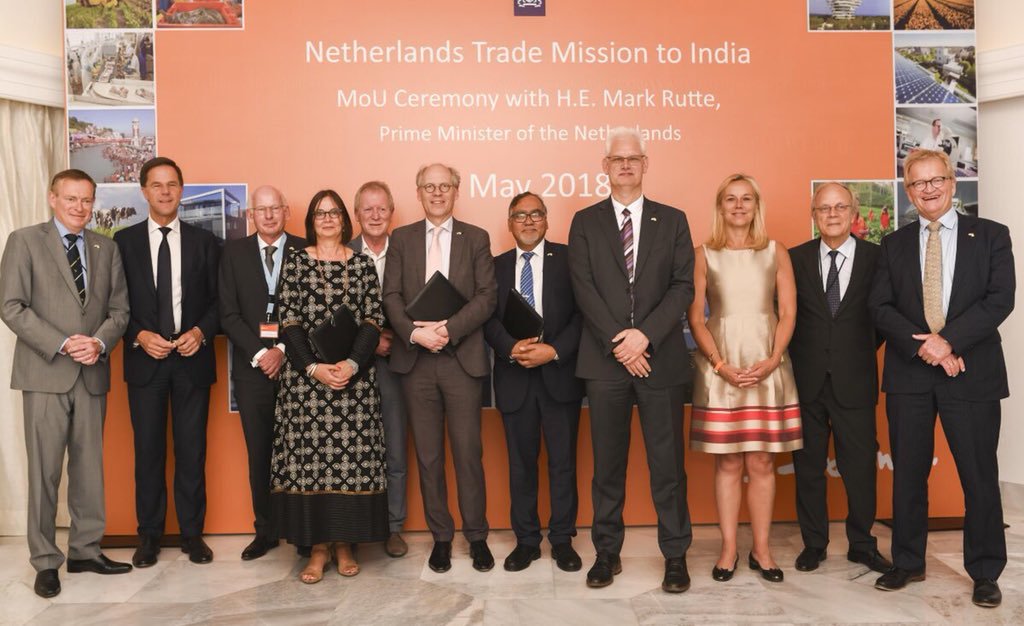

At the start of a new partnership
The opportunities this creates for Dutch organisations go far beyond market potential alone. “We have innovative solutions in the Netherlands, but in India the number of patients is exponentially larger,” says Van Lin. “That forces us to rethink how solutions can be delivered at scale. Combined with the lower costs associated with local production, this leads to greater cost efficiency. Ultimately, that also helps make healthcare in the Netherlands more affordable. This is no longer about development aid; it is about partnership.”
Now, thirty years after Gujarat, TFHC stands at the beginning of a new chapter in Dutch-Indian healthcare collaboration. Together with Health Holland, a new project proposal has been submitted. Governments, knowledge institutions and companies are working on a new roadmap for collaboration with India — once again demand-driven, integrated and based on shared interests on both sides. What began as a project in one Indian state has evolved into a proven way of working and a lasting conviction: healthcare worldwide improves when you connect the right people.
Built on 30 years of impact. Ready for the next.
Want to learn more about thirty years of Task Force Health Care, or curious about the opportunities we see for your organisation? Get in touch.
⸻
Stay connected
For more information about this mission or opportunities for collaboration, feel free to reach out:
Phone: +316 82 39 04 68
E-mail: info@tfhc.nl