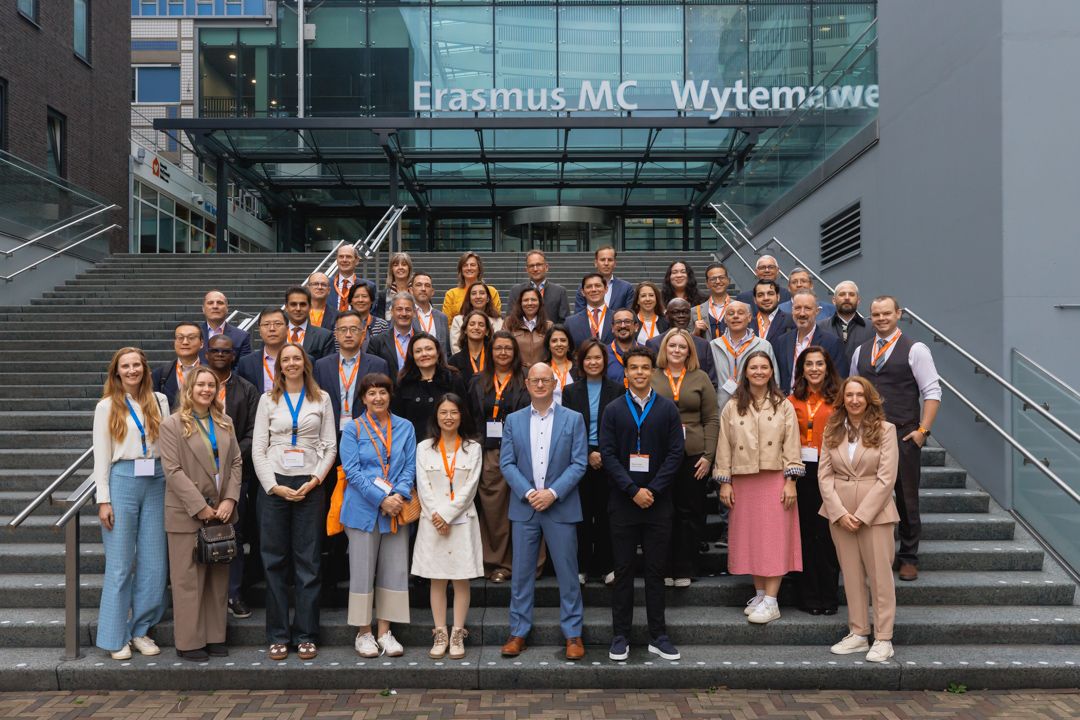
For thirty years, Task Force Health Care has been working to improve healthcare worldwide by connecting the right people and organisations. Its proven public-private partnership model is now used across the globe, but its value is perhaps most visible in Ukraine. There, TFHC is working alongside the government, businesses and knowledge institutions to rebuild the country’s healthcare system.
From scaling down
The partnership with Ukraine did not begin after the Russian invasion in 2022, but years earlier, in response to a very different request from the government. Following the revolution in 2014, the country had initiated far-reaching healthcare reforms. The old system, which included funding per hospital bed and a high level of inpatient care, had resulted in overcapacity, forcing several hospitals to close. At the same time, the country wanted to modernise its healthcare system and better align it with European rules and standards, paving the way for potential future accession to the European Union.
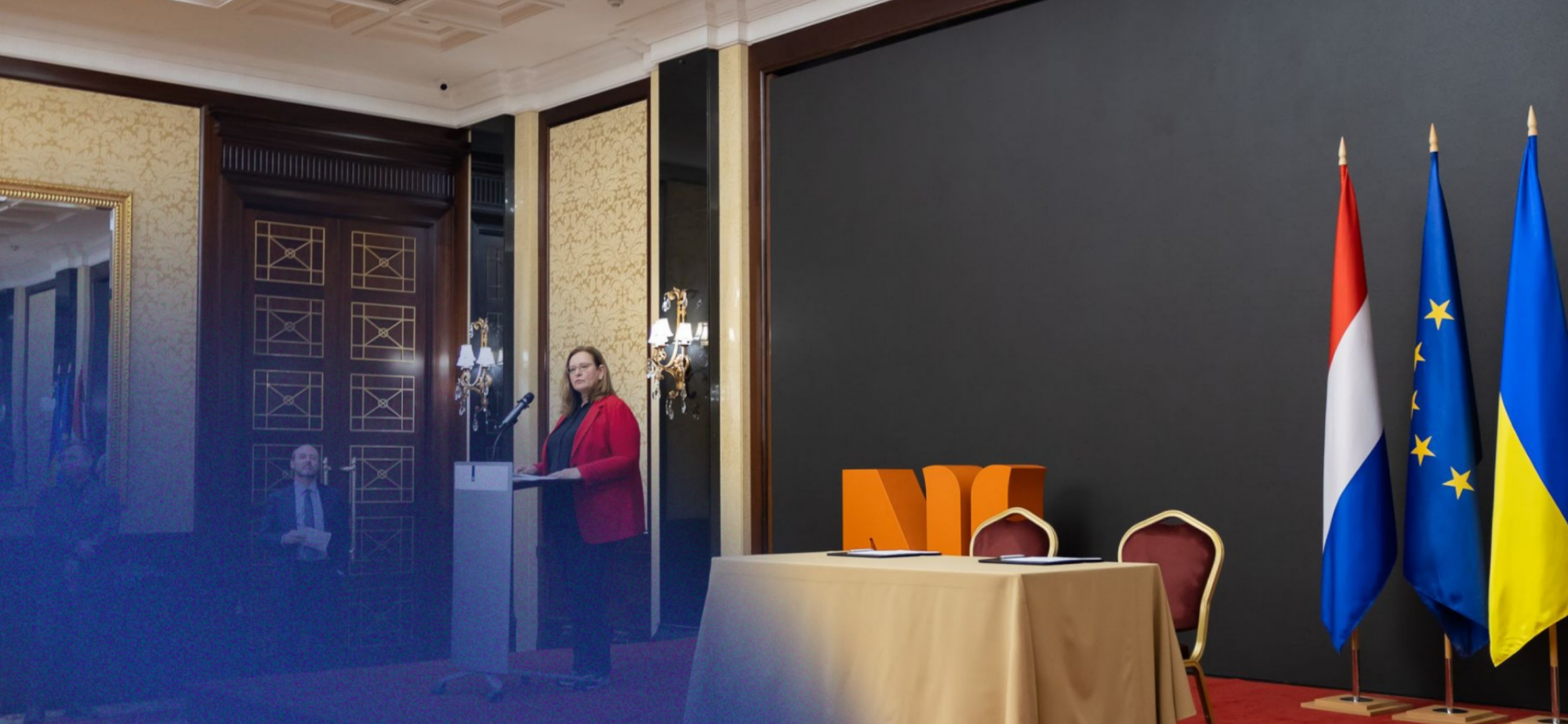
To this end, a Letter of Intent was signed in 2017 between Task Force Health Care (TFHC) and the Vinnytsia region. This marked the start of a joint effort to exchange knowledge in the field of life sciences & health, as well as to build and modernise hospitals, education and training, strengthen the healthcare system, and supply medical equipment and technology. In the years that followed, TFHC hosted Ukrainian delegations at the World of Health Care and the Health Holland Visitors Programme events. A healthcare mission to Kyiv took place in February 2020, followed by a visit from a Ukrainian delegation to the Netherlands in December 2021 — the last visit before Ukraine would change beyond recognition.
To scaling up
After the Russian invasion in 2022, the country — and with it, its healthcare system — changed completely. More than 2,600 healthcare facilities have been damaged or destroyed, while much of the country’s equipment and buildings had already been in need of modernisation even before the war. Millions of Ukrainians fled the east of the country, forcing hospitals in the west to significantly scale up their capacity at short notice. In the meantime, trains carrying wounded soldiers continued to arrive, filled with patients who had already been treated at multiple locations, often with poor documentation of their medication and procedures.
Pieter van Beers, project manager at TFHC: “When the war began, we saw a great deal of support from the Dutch business community to help Ukraine. So we immediately took the initiative to provide help in a structured way and to join forces. Aid is a given at the start, but donations are only a temporary solution. How can we work with Ukraine on a structural basis to rebuild the country and its healthcare system? Together with the Ministry of Foreign Affairs, we set out to answer that question.”


Structural collaboration instead of emergency aid
The answer came in the form of the ‘Ukraine-Netherlands Public-Private Healthcare Recovery Platform’, which TFHC set up on behalf of the Ministry of Foreign Affairs. Its goal: to bring together Dutch stakeholders that were already active in Ukraine, or wanted to become active there, in order to exchange knowledge and connect that knowledge to Ukraine’s needs. There are now around 140 of them.
“In the platform’s first year, we focused primarily on Ukraine’s needs and on which Dutch companies and initiatives were a good match. This highlighted a number of issues,” says Van Beers. “For example, more mobile and modular hospitals are needed, there is a shortage of diagnostic capacity, and the energy supply presents challenges as well. In addition, many people have suffered severe physical injuries as a result of the war, including the loss of limbs, as well as psychological trauma. This has created a great need for more physical and mental rehabilitation expertise and clinics.”
Removing a new barrier each year
In collaboration with the Netherlands Enterprise Agency (RVO), TFHC has organised various missions and activities in recent years to connect Dutch companies and organisations with Ukrainian partners. In the early days, this called for a bit of creativity. “Each year was dedicated to removing a particular barrier. At first, the question was: ‘How do we connect people in the first place?’ Because of the situation in Ukraine and the red travel advisory in place at the time, it was not possible for us as a public-private platform to travel to Ukraine ourselves. So we invited Ukrainian delegations to the Netherlands, or met them at events such as the Rebuild Ukraine Conference in Warsaw.”
Once the connections had been established, the next barrier presented itself: funding. “Because of the war economy, the Ukrainian Ministry of Health had only limited budget and capacity available. Dutch subsidies largely flow through international financial institutions such as the World Bank, which, together with the Ukrainian government, carefully control how the funds are allocated. Unfortunately, because of price-driven procurement policies, only a limited share of that funding finds its way back to Dutch companies in the form of partnerships,” says Van Beers. “That is why we worked with NL-Works to draft a funding report, mapping out how Dutch companies and organisations can still finance projects with Ukrainian partners.”
The first tangible successes
Thanks in part to the funding report, Dutch innovations found their way to Ukraine, including through RVO’s ‘Ukraine Partnership Facility’ (UPF) funding rounds. The projects that emerged from these have now been completed or are currently underway. Take TFHC partner Coolfinity, for example. “They supply cooling systems for medication and vaccines that keep working even during prolonged power outages. That prevents an enormous amount of waste,” says Van Beers.
“Another great example is our partner Psylaris, which uses VR technology in the treatment of conditions including PTSD. There is an enormous need for that kind of mental healthcare in Ukraine. Our partner Philips also plays a major role — through donations, various initiatives and participation in the UPF. Through the latter, they are increasing diagnostic capacity in the Dnipro region by supplying medical systems, allowing more people to receive timely diagnoses.”
Meanwhile, various subclusters are emerging among Dutch companies and organisations that can offer a complete solution. “We are now seeing partnerships develop in which one party can build a modular hospital, another can supply the diagnostic equipment, and yet another can fit out the operating theatres. By joining forces, there are also greater possibilities in terms of funding from the World Bank, for example,” says Van Beers.
To Kyiv at last
In early 2026, TFHC travelled to Kyiv for the first time since the invasion, with a delegation of ten companies from the healthcare sector and ten from the energy sector. “After four years of meeting each other in countries surrounding Ukraine, there comes a point when you have to say: we are coming to you. Fortunately, this was made possible in collaboration with the Ministry of Foreign Affairs and the Dutch embassy in Kyiv,” says Van Beers. “We had met the minister and officials from the Ukrainian Ministry of Health before, but it was clear that they greatly appreciated the fact that we were there in person this time, despite the heavy attacks on Kyiv.”
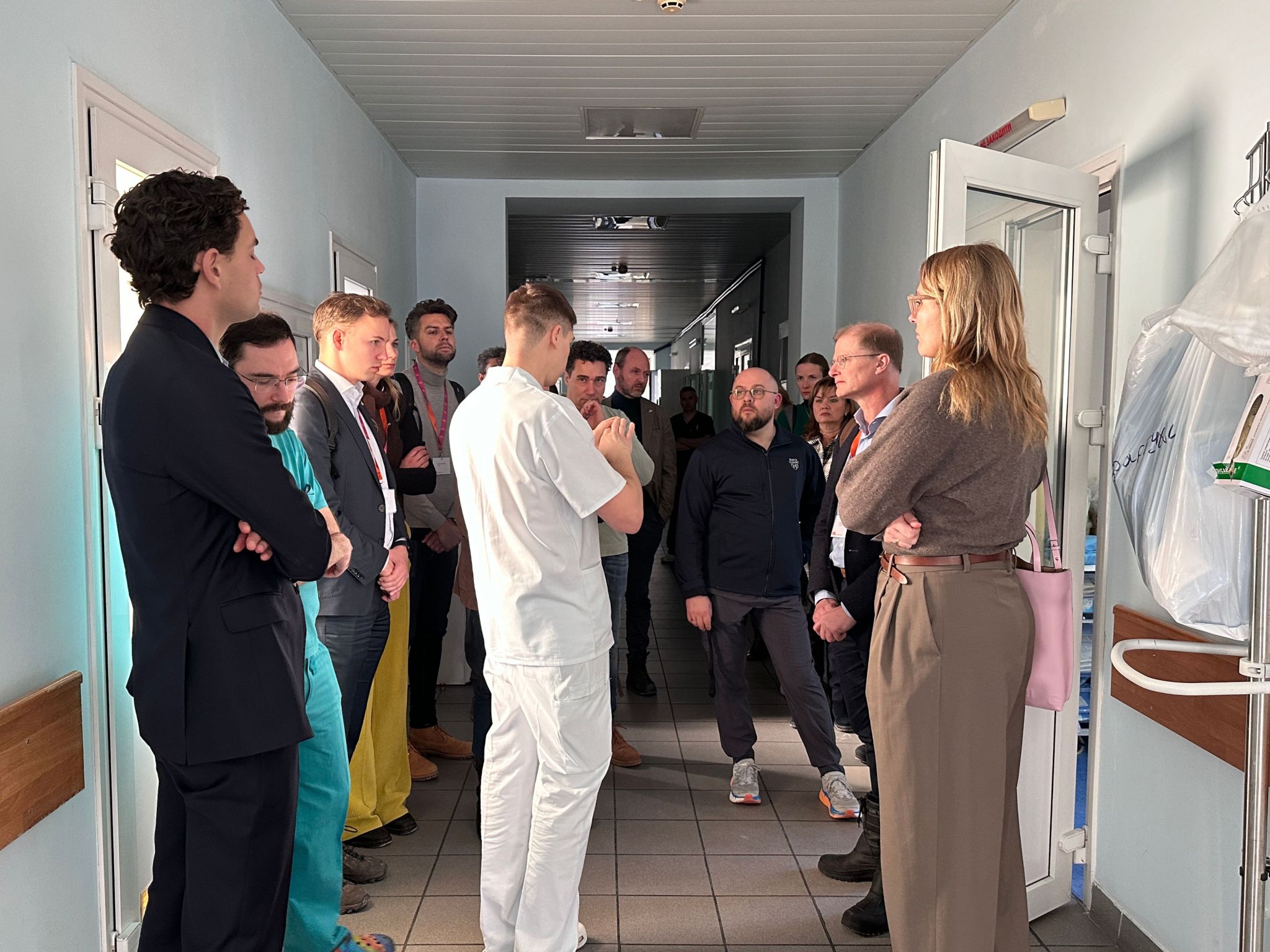
“There was a large networking event, we met the ministers of Energy and Health, and we visited hospitals treating soldiers as well as a children’s hospital that had been bombed. That night, there was a major bombardment, with 300 drones and 35 missiles. Fortunately, our delegation was safe, but experiencing such an attack first-hand is incredibly intense,” says Van Beers. “The morning after the bombardment, we had a breakfast meeting scheduled with the director of the World Health Organization, but we were not yet allowed to leave the bomb shelter. So he came to our hotel instead, and we joined the meeting in our pyjamas. Those are the kinds of moments you don‘t easily forget.”
Continuing to build Ukraine’s healthcare system
The visit to Kyiv contributed to the developments currently taking place. “In 2025, together with RVO, we drew up a market report exploring the areas where we see the greatest opportunities for the Netherlands and Ukraine: mental and physical rehabilitation, telehealthcare and infrastructure. In September 2026, we will return to Kyiv to further develop the collaboration in those areas,“ says Van Beers.
As such, the partnership is following the same path that TFHC embarked on in India thirty years ago: from aid to sustainable, equal collaboration. It is TFHC’s mission in its purest form. “Combining aid and trade, building a sustainable partnership, always responding to demand: that is what we do,” says Van Beers. “Improving healthcare by connecting people.”
Stay connected
For more information about this mission or opportunities for collaboration, feel free to reach out:
Phone: +316 82 39 04 68
E-mail: info@tfhc.nl